LOOKPORT / TICKETING & EVENT BUDGETING
Avoid CMA fines and lost sales: UK ticket fee strategy with tools
Comply with the April 2025 all in pricing rule, cut checkout drop, and use tiered, dynamic pricing plus Lookport calculators to model fees.

Treat fees as part of your ticket price: show the all-in total upfront and build your product tiers, conversion testing and margin targets around that single displayed figure. This means combining transparent all-in pricing with tiered offers, paced releases and regular testing. The result is a fee structure that satisfies current UK rules on hidden fees while still giving you room to optimise revenue through dynamic and data-driven pricing.
TL;DR:
- Since April 2025, UK listings must show every mandatory fee in the upfront total; optional extras must require an active buyer choice.
- Per ticket charges suit variable group sizes, while flat per order fees favor group bookings; baked in prices eliminate checkout surprises.
- Dynamic pricing needs comparable past sales, audience or ticket segmentation, automated rules, and caps that protect early buyers from unjustified increases.
- A single football club case study reported about 14% higher sales and 39% higher revenue, so treat dynamic pricing gains as uncertain.
Table of Contents
- Core fee architectures and trade-offs
- Behavioural tactics that increase uptake without surprising buyers
- Dynamic and data-driven pricing: what it is and what it needs
- UK compliance: an all-in pricing checklist for your booking journey
- Implementation checklist: modelling fees, pacing sales and testing changes
- How Lookport’s ticketing and calculator tools support this fee strategy
- Model your event before you set a single price
- FAQ
- Sources
Core fee architectures and trade-offs
Before you touch pricing tactics, you need to settle on a fee architecture. Each model affects how buyers perceive value and how your books reconcile at the end of the night.
Per-ticket fees apply a charge to each ticket in the order, which suits events where group sizes vary widely and you want the fee to scale with volume. Per-order fees charge a flat amount once per transaction, which rewards group bookings and simplifies your accounting because the fee no longer multiplies with ticket count. Baked-in or all-in pricing folds the fee into a single headline price, which is now the only legally compliant way to advertise tickets and tends to read as more trustworthy to buyers who have grown wary of surprise charges at checkout.
Delivery fees sit separately from service fees in most setups: a service fee covers the cost of running the transaction, while a delivery fee covers physical or digital fulfilment, such as courier delivery of physical tickets.
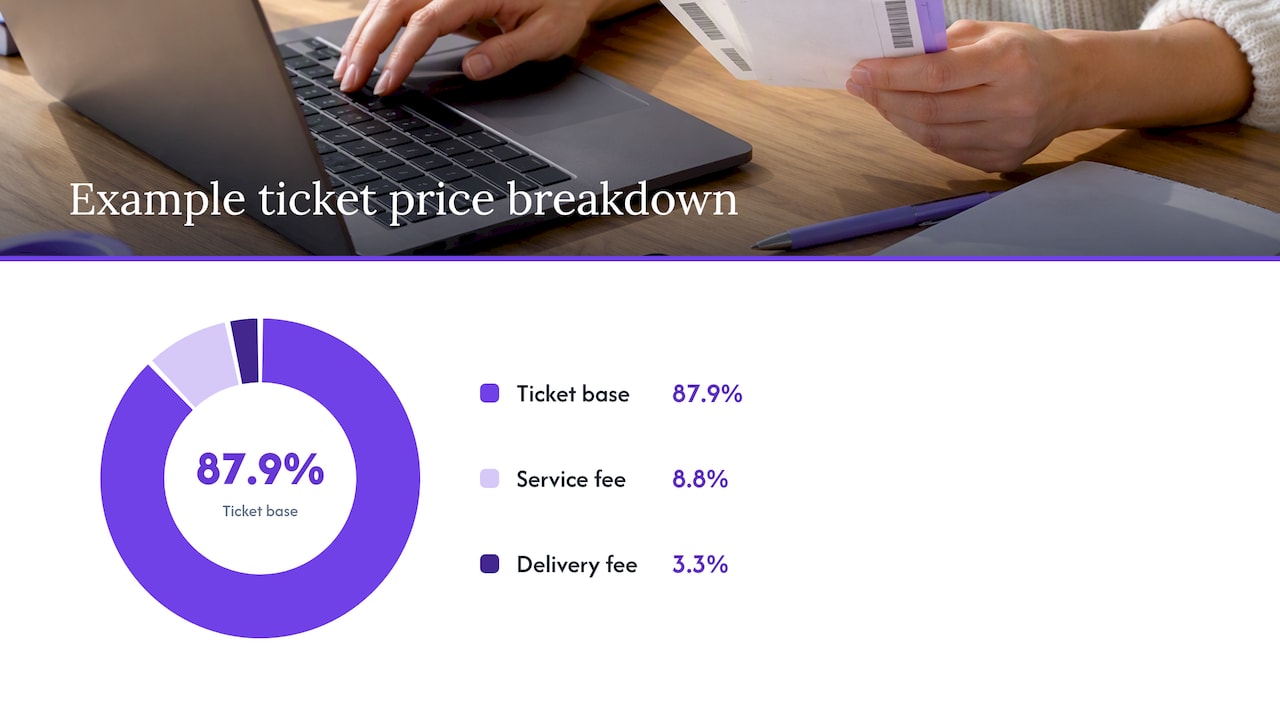
Say a promoter sells a £40 ticket with a £4 service fee and a £1.50 delivery charge. Under an all-in model, the advertised price becomes £45.50, with no further charges at checkout. This is a hypothetical example, not a quoted price.
If you are switching architecture, do it in one move rather than gradually:
- Update your advertised price everywhere at once, including partner feeds and marketing assets.
- Brief box office and customer service staff before the change goes live so they can explain the new total confidently.
- Keep a short internal note on how the new total breaks down, for reconciliation and for any buyer who asks.
Behavioural tactics that increase uptake without surprising buyers
Fee architecture sets the frame, but how you present prices within that frame shapes buyer behaviour. These tactics work with transparent pricing, not against it.
- Price signalling: rounded prices (£40) tend to read as simpler and more premium, while prices ending in .99 or .95 can signal value for budget-conscious tiers.
- Scarcity and timed release: splitting inventory into phases (early-bird, general sale, limited VIP) creates genuine urgency when the limits are real, rather than manufactured.
- Anchoring and decoys: placing a premium tier above your target tier makes the target look like better value by comparison.
- Transparent perks: bundling a genuine extra, such as early access or a small merchandise item, into an early-bird tier gives buyers a reason to commit sooner without disguising the fee itself.
Pro Tip: Keep every perk and price tier visible on the same page as the all-in total, buyers trust bundles far less when they have to hunt for what is included.
Dynamic and data-driven pricing: what it is and what it needs
Dynamic pricing adjusts your ticket price in response to live signals such as time remaining before the event, remaining inventory and observed demand. The Wikipedia summary of dynamic pricing covers the main demand-responsive techniques used across ticketing, retail and travel.
Evidence of what it can do: a data-driven pricing framework applied in a football club case study reported increases in ticket sales and ticketing revenue in their case study. That result comes from a single club case study using a machine-learning optimisation framework, so treat it as an illustration of potential upside rather than a guaranteed outcome for any specific event.
Before adopting dynamic pricing, you need a few things in place:
- Clean historical sales data covering at least a few previous events of a similar type.
- Segmentation of your audience or ticket types, since a single blended price curve rarely fits general admission and VIP demand equally well.
- Tooling or a platform feature that can apply pricing rules automatically rather than manual spreadsheet updates on sale day.
- Guardrails that cap how far prices can move, so loyal early buyers are not penalised relative to late buyers for no defensible reason.
If you have no machine-learning capability, start with simple rules: raise price by a fixed increment once inventory crosses a threshold, or once you pass a set number of days before the event. You can explore Lookport’s dynamic pricing feature as one route to applying these rules without building a custom system.
UK compliance: an all-in pricing checklist for your booking journey
Since April 2025, UK law has required all mandatory ticket fees to be included in the total price shown upfront, and the Competition and Markets Authority enforces this ban on drip pricing. That means the price a buyer sees on your listing page has to match what they pay at checkout, with no late additions beyond genuinely optional extras.
Run this audit across your booking journey:
- Check the advertised price on every listing, partner page and marketing asset shows the full mandatory total, including service and delivery fees.
- Walk through your own checkout and confirm the running total never increases unless the buyer actively opts into an extra, such as insurance or merchandise.
- Remove any pre-ticked boxes for optional add-ons, buyers must choose to add them.
- Check that “from” prices reflect a genuinely available quantity of tickets at that price, not a single seat used to lure clicks.
A partner guide on transparent ticket pricing covers similar operational fixes and is worth a read if you manage multiple sales channels. Beyond avoiding enforcement risk, a consistent all-in price tends to reduce checkout abandonment and post-purchase complaints, since buyers are not caught out by a total that moved since they first saw it.
Implementation checklist: modelling fees, pacing sales and testing changes
Turning strategy into a working fee structure takes four inputs: your fixed costs (venue, production, staff), variable costs (per-ticket fees, payment processing), your target margin, and an expected sell-through curve based on past events or comparable shows.
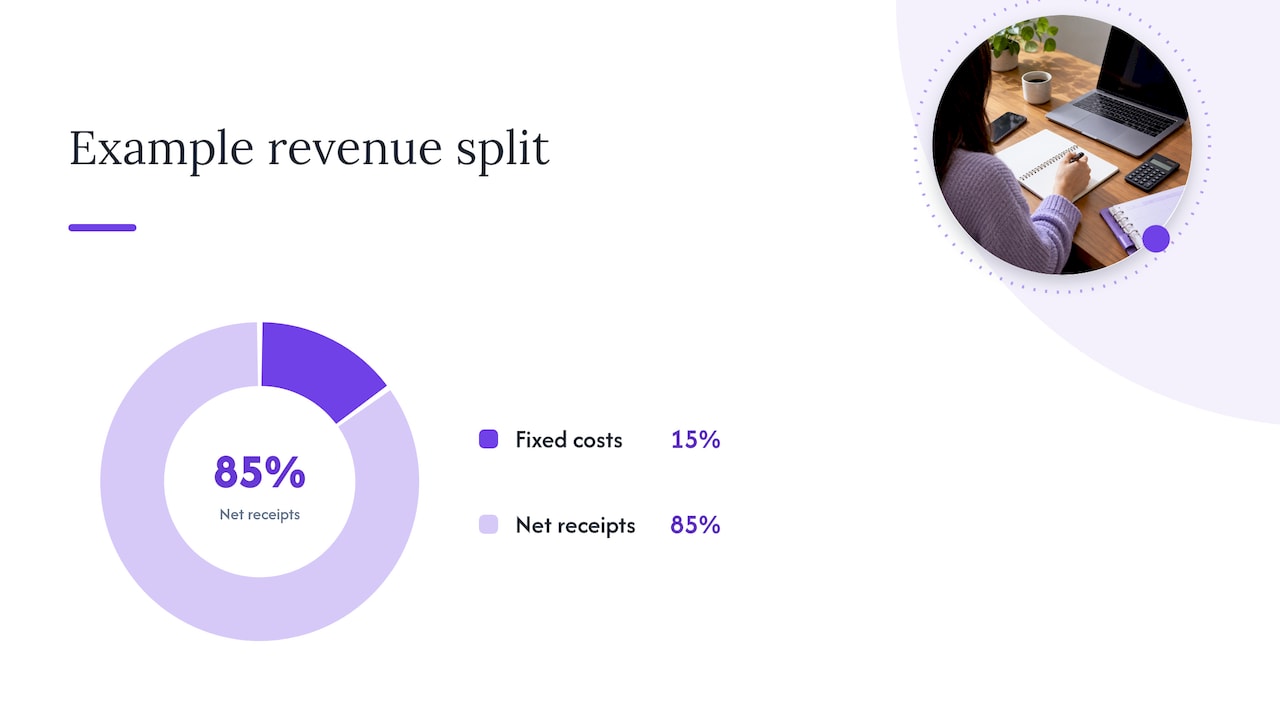
Feed those into a break-even or fee calculator before you set a single price. Say you need £18,000 in net receipts from a 600-capacity show with £3,200 in fixed costs, a fee calculator can work backwards from that net figure to the all-in price you need to advertise, this is a hypothetical example to illustrate the workflow, not a quoted outcome. A tour break-even calculator and a ticketing fee calculator both handle this kind of modelling, converting your target net revenue and costs into the headline price your buyers will see.
Once prices are live, test changes in small, measurable steps:
- Track conversion rate, average revenue per buyer and refund rate for each tier or presentation variant.
- Run one change at a time, such as moving from a rounded price to a .99 price, so you can attribute any shift in conversion to that single change.
- Give each test enough volume to be meaningful before you draw conclusions, a handful of sales either way rarely tells you much.
Pro Tip: Keep a simple reconciliation log that matches your advertised all-in price to the net amount that actually lands in your account, it saves hours when finance asks where a discrepancy came from.
How Lookport’s ticketing and calculator tools support this fee strategy
Lookport Ticketing pays ticket proceeds directly into your own Stripe account, and charges a 6% commission with no other platform charges, so the fee you model is the fee you actually pay. Because payouts run through your own Stripe account, availability follows Stripe’s supported countries.
A few tools map directly onto the steps above:
- The ticketing fee calculator converts a target net receipt into the all-in price you need to advertise.
- The concert profit and tour break-even calculator models costs, capacity and margin across a full tour or single show.
- Online and hybrid ticketing features let you display the all-in price consistently across sales channels.
- Dynamic pricing applies rule-based price adjustments as inventory and timing change.
Model your event before you set a single price
We built our calculators so you can work out your all-in price before you publish a single listing, not after a sale falls short. Start with the tour break-even calculator to check your fixed costs, target margin and expected sell-through against a realistic ticket price, then move to Ticketing to publish that price as a compliant, all-in total.
Our commission is transparent and proceeds flow directly into your own Stripe account, so the number you model is the number you keep.
- Model your costs and target margin with the tour break-even calculator.
- Set up a compliant, all-in listing with Lookport Ticketing.
- Check Stripe’s supported countries before you set up payouts.
FAQ
Is there a way to avoid ticket fees?
Mandatory fees now have to be folded into the advertised price under UK law, so buyers cannot avoid them by choosing a different checkout path, the fee is simply part of the ticket price. Genuinely optional extras, such as insurance or merchandise, remain avoidable because buyers choose whether to add them.
What are some effective ticket pricing strategies?
A combined approach tends to work best: show a transparent all-in price, split inventory into phased tiers such as early-bird and general sale, and use anchoring with a premium tier to make your target tier look like better value. Testing one change at a time against conversion and refund rate helps you confirm which tactic actually moves sales.
How do I outsmart dynamic pricing as a buyer or counter it as an organiser?
As an organiser, dynamic pricing works best within clear guardrails that cap how far a price can move, so you protect trust with early buyers rather than simply chasing the highest price the market will bear. A data-driven case study found increases of around 14% in sales and around 39% in revenue in one club’s pricing framework, a result worth noting but not a guarantee for every event.
What are the main pricing strategies organisers use?
Common approaches include flat all-in pricing, tiered release pricing across early-bird and general sale phases, premium or VIP tiers for anchoring, and rule-based dynamic pricing tied to inventory or time remaining. Most organisers blend several of these rather than relying on one method alone.
Sources
- Fake reviews and sneaky hidden fees banned once and for all
- Data-driven ticket pricing in football: leveraging customer perceived value for revenue optimization
Recommended
Ticketing & event budgeting
 2026-10-22
Ticketing Analytics for UK Promoters: What to Track and Why
Ticketing analytics for UK concert promoters: the metrics that drive decisions, how to set up tracking, and how to tie sales data back to your show budget.
 2026-10-21
Concert Break-Even Calculator: How Many Tickets You Must Sell
Work out how many tickets a UK concert needs to break even. Costs, PRS, ticket commission, a worked example and a free calculator for promoters and venues.
 2026-10-19
Ticket Sales Break-Even Analysis for UK Shows
Work out how many tickets you must sell to cover a UK show: VAT, PRS, fees, fixed costs and a worked example, plus a free break-even calculator.
 2026-10-18
Refund Policy for Concerts: What UK Promoters Must Offer
What UK law and industry rules require when a concert is cancelled, moved or the buyer changes their mind, plus how to write a clear refund policy.
 2026-10-15
Facebook Ads for UK Promoters: Track Ticket Sales Before Spend
UK promoters can set up Meta pixel and Conversions API tracking, choose audiences, estimate ticket costs, and link Facebook ad spend to ticket revenue.
 2026-10-14
Profit Margins: Test 10 P&L Lines for UK Concert Promoters
See how UK concert promoters can model profit per show with 10 P&L inputs, test sell through and costs, and check break even before committing a deposit.