LOOKPORT / TICKETING & EVENT BUDGETING
Concert Break-Even Calculator: How Many Tickets You Must Sell
Work out how many tickets a UK concert needs to break even. Costs, PRS, ticket commission, a worked example and a free calculator for promoters and venues.

A concert breaks even when ticket income, after the costs that rise with every sale, covers the costs you pay whatever happens. The formula is fixed costs divided by the net income per ticket. The hard part is getting the inputs right. This guide shows each input, a worked UK example and the checks to run before you commit a deposit. You can model your own show in the Lookport concert profit and tour budget calculator.
TL;DR
- Break-even tickets = fixed costs ÷ (ticket price minus the per-ticket costs). Round up to a whole ticket.
- Treat PRS for Music and your ticketing commission as percentages of ticket income, not as fixed lines.
- Always compare break-even tickets with venue capacity. If the answer is above 100%, the show cannot work at that price.
- Run three prices and three attendance levels before you sign. One scenario is a guess.
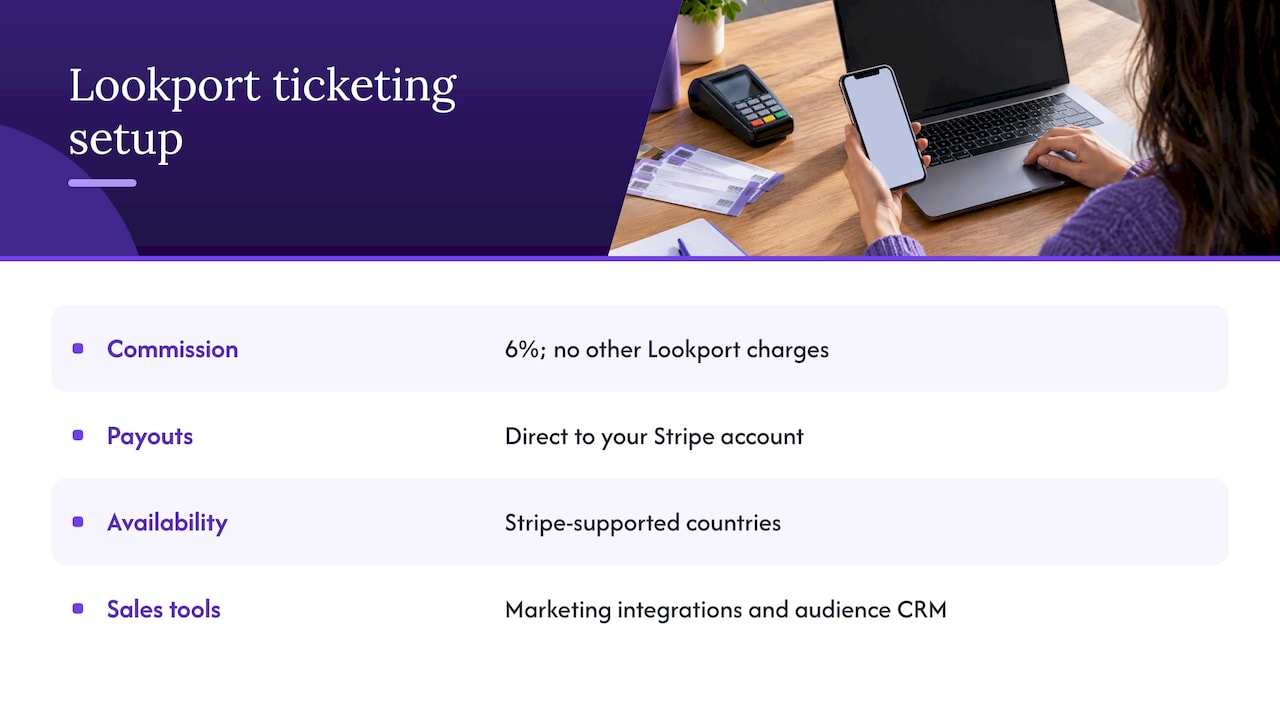
- Lookport Ticketing charges 6% commission with no other Lookport charges, and proceeds go straight into your own Stripe account.
Table of Contents
- What break-even means for a concert
- The formula, step by step
- Which costs go in the model
- Worked example: a 500-capacity show
- Validate the inputs before you trust the answer
- Run scenarios, not a single answer
- Break-even for a tour is not the same as for one show
- Ticket price, fees and transparency
- Use the Lookport calculator
- Selling the tickets with Lookport Ticketing
- Mistakes that break the model
- FAQ
- Next step
- Sources
What break-even means for a concert
Break-even is the number of paid tickets at which profit is exactly zero. One ticket fewer and you lose money. One ticket more and you start to keep it.
Two kinds of cost decide where that point sits:
- Fixed costs do not move with ticket sales: artist fee or guarantee, venue hire, production, marketing, staffing, insurance.
- Variable costs move with sales: ticketing commission, PRS for Music, card processing, and sometimes a venue’s percentage of the door.
A simple rule of thumb will not do here. Break-even is arithmetic on your own numbers, which is why a calculator beats an industry average.
The formula, step by step
- Add up every fixed cost for the show.
- Take the ticket price you plan to charge, excluding VAT if you are VAT-registered and the price is VAT-inclusive.
- Subtract the per-ticket costs. For percentage costs, multiply the price by the combined percentage.
- Divide fixed costs by the result from step 3.
- Round up. Compare the answer with capacity.
In short: break-even tickets = fixed costs ÷ (price × (1 − combined percentage costs) − any flat cost per ticket).
Which costs go in the model
Missing lines are the most common reason a show that looked profitable on paper loses money. Work through this list.
Fixed costs
- Artist fee or guarantee. A guarantee is a fixed minimum paid by the promoter regardless of sales. A door deal pays the artist from ticket income instead. The Playbook’s tour P&L guide lists guarantee versus door deal among the four numbers a tour P&L depends on. The deal type changes your break-even completely, so model both.
- Venue hire. Include any minimum bar spend or hire percentage written into the contract.
- Production. Sound, lights, backline, engineers, crew, stage management.
- Staffing and safety. Door staff, stewards, security, first aid.
- Marketing. Paid social, print, PR, influencer or press costs.
- Insurance, licences and admin. Public liability, any temporary event notices, travel and accommodation for the artist if you provide them.
- Content. Photography and video for promotion and for the artist’s own use. If you want a specialist, gig photography in London is one option to price before you add a line to the budget.
Variable costs
- Ticketing commission. On Lookport Ticketing this is 6% commission, with no other Lookport charges.
- Payment processing. Organisers receive proceeds directly in their own Stripe account, so Stripe’s own processing fees are set by Stripe. Check Stripe’s current pricing for your account and add them as a percentage and a flat amount per transaction.
- PRS for Music. For live popular music, Making Music reports the Live Popular tariff at 4.2% of box office takings. Check the current tariff with PRS for Music before you finalise, because it can change and the rules differ for unticketed events.
- Venue percentage. If the venue takes a share of door income, that is a percentage too.
Worked example: a 500-capacity show
This is a hypothetical example for illustration only. It is not a Lookport customer result and not a forecast. All figures are assumptions.
| Fixed cost | Amount |
|---|---|
| Artist guarantee | £6,000 |
| Venue hire | £2,500 |
| Production | £1,200 |
| Marketing | £800 |
| Staffing and security | £700 |
| Insurance and admin | £300 |
| Total fixed costs | £11,500 |
Variable costs as a share of ticket income:
- PRS Live Popular tariff: 4.2%
- Lookport commission: 6%
- Combined: 10.2%
For simplicity the example leaves out Stripe processing fees and VAT. You must add both in a real model. The figures also assume the PRS rate applies to the full ticket price, so confirm the basis with PRS for Music.
Now test three ticket prices.
| Ticket price | Net per ticket after 10.2% | Break-even tickets | Share of 500 capacity |
|---|---|---|---|
| £25 | £22.45 | 513 | 103% (cannot break even) |
| £30 | £26.94 | 427 | 85% |
| £35 | £31.43 | 366 | 73% |
The £25 ticket fails before the doors open. Even a sell-out leaves you short.
Now look at profit if the room sells out:
- At £30: 500 × £26.94 = £13,470, minus £11,500 = £1,970 profit.
- At £35: 500 × £31.43 = £15,715, minus £11,500 = £4,215 profit.
The lesson is the gap between a sell-out and break-even. At £30 you need to fill 85% of the room to avoid a loss, and a sell-out earns under £2,000. That is a thin cushion for a show with a £6,000 guarantee. Raising the price by £5 cuts break-even by 61 tickets.
Validate the inputs before you trust the answer
A calculator returns exactly what you put in. Check these four things.
- Use sellable capacity, not stated capacity. Production positions, sightlines and safety limits can remove seats or standing space. Use the number the venue will actually let you sell.
- Count comps. Guest lists, artist allocations and press tickets bring in no income. Reduce the sellable number accordingly.
- Get quotes, not guesses. Replace estimates with written quotes for the largest lines: artist, venue and production.
- Check VAT. If you are VAT-registered, a VAT-inclusive ticket price means you keep less than the headline figure. Ask your accountant how it applies to your shows.
For a guide to building the full P&L around these numbers, see our concert budget breakdown and the concert promoter profit margin guide.
Run scenarios, not a single answer
A single break-even number hides risk. Build a grid.
- Prices: three levels, for example your target and £5 either side.
- Attendance: 50%, 70% and 90% of sellable capacity.
- Cost overrun: add 10% to fixed costs and see what happens.
Cells where you lose money at 70% attendance deserve attention. If most of the grid is red, renegotiate the guarantee, move to a door deal, find a cheaper room or change the price before you pay a deposit.
Demand matters as much as cost. A report from Tixel and Bolster on UK and Ireland ticketing found live entertainment a priority spend for nearly 48% of attendees despite cost-of-living pressure. That does not tell you your show will sell. It does mean pre-sale evidence is worth collecting before you commit to costs. Our guides on forecasting ticket sales after the first week and AI ticket forecasts for budget cases show how to turn early sales into a revised attendance scenario. Treat any forecast as an estimate with a range, not a promise.
Break-even for a tour is not the same as for one show
On a tour you can look at each date or at the whole run. The Beginner’s Guide to Touring Budgets from Amplify NZ Music suggests budgeting show by show and notes that some dates are investment shows. They build an audience or fill a routing gap. In that case total revenue across all dates must cover the total cost base.
For your own tour:
- Model each date with its own venue, capacity and price.
- Mark investment dates openly so a loss on one is a decision, not a surprise.
- Add shared costs once: rehearsal, tour marketing, travel between dates.
- Check that the combined result clears break-even with a margin.
The tour budget template guide walks through this layout.
Ticket price, fees and transparency
Your break-even price is a floor, not the price to charge. Market and fee rules shape the final number.
- Compare with similar shows. Look at what comparable artists charge in rooms of the same size.
- Show the full price. The UK government has run a call for evidence on pricing practices in the live events sector, including dynamic pricing. Read the current position before you design your fee structure. Our UK ticket fee strategy guide covers how to present fees clearly.
- Decide who pays the commission. You can absorb the 6% in the ticket price or pass it on. Either way, model it. The ticketing fee calculator shows the effect on your net income.
- Plan early pricing. Early-bird tiers change average ticket income. Use the average price actually achieved in your model, not the top tier. See presale velocity and pricing for a method.
Use the Lookport calculator
The Lookport concert profit and tour budget calculator lets you model costs, ticket prices, revenue and break-even in one place. A sensible workflow:
- Enter your fixed costs from written quotes.
- Add percentage costs: PRS, ticketing commission and processing.
- Enter sellable capacity and a ticket price.
- Read the break-even ticket count and the profit at 50%, 70% and 90% sold.
- Change the price and the guarantee until the grid is acceptable.
Save the result with the date and assumptions. When early sales arrive, rerun it with the real average price.
Selling the tickets with Lookport Ticketing
Once the numbers work, the ticketing set-up affects what you keep. Lookport Ticketing charges 6% commission with no other Lookport charges. Ticket proceeds are paid directly into your own Stripe account. Availability follows Stripe-supported countries. You can check the details on the pricing page.
For promoters who want to track what drives sales, there are also marketing integrations and audience CRM and customer data tools described on the site. Check each feature page for what is currently live.
Mistakes that break the model
- Using the venue’s maximum capacity instead of sellable capacity.
- Forgetting PRS, VAT or processing fees.
- Applying the average price of a sell-out to a show that sells half.
- Treating the guarantee as the only artist cost when there is also travel, hospitality or a rider.
- Running one scenario and calling it a budget.
- Spending on marketing without a target for cost per ticket. For paid social, our Facebook Ads for concerts guide explains how to track sales back to spend.
FAQ
How do I calculate my break-even point for a concert?
Divide your fixed costs by the net income per ticket. Net income per ticket is the ticket price minus the per-ticket costs, such as ticketing commission and PRS. Round up to a whole ticket and compare with sellable capacity.
How do I work out the cost of an event?
List fixed costs first: artist, venue, production, staffing, marketing and insurance. Then add the costs that depend on sales, such as PRS, ticketing commission and payment processing. Use written quotes where you can, and add a contingency for overruns.
How do I calculate cost per person for an event?
Divide total event cost by the number of expected paying attendees. Note that this is different from break-even price: if you expect 400 paid tickets and total costs are £11,500, the cost per paying person is £28.75 before any profit. Include the percentage costs that rise with the ticket price.
What happens if break-even is above my venue capacity?
The show loses money even if it sells out at that price. Raise the ticket price, cut fixed costs, renegotiate the guarantee or move to a smaller room. If none of those work, do not proceed.
Next step
Open the concert profit and tour budget calculator, enter your own quotes and test three ticket prices. When the numbers hold, set up sales with Lookport Ticketing.
Sources
- PRS licence cost, Making Music
- Before you book a single date: Build your tour P&L, The Playbook
- Beginner’s Guide to Touring Budgets, Amplify NZ Music
- Tixel and Bolster UK and Ireland ticketing report, Event Industry News
- Putting fans first: call for evidence on pricing practices in the live events sector, GOV.UK
Recommended
Ticketing & event budgeting
 2026-10-22
Ticketing Analytics for UK Promoters: What to Track and Why
Ticketing analytics for UK concert promoters: the metrics that drive decisions, how to set up tracking, and how to tie sales data back to your show budget.
 2026-10-19
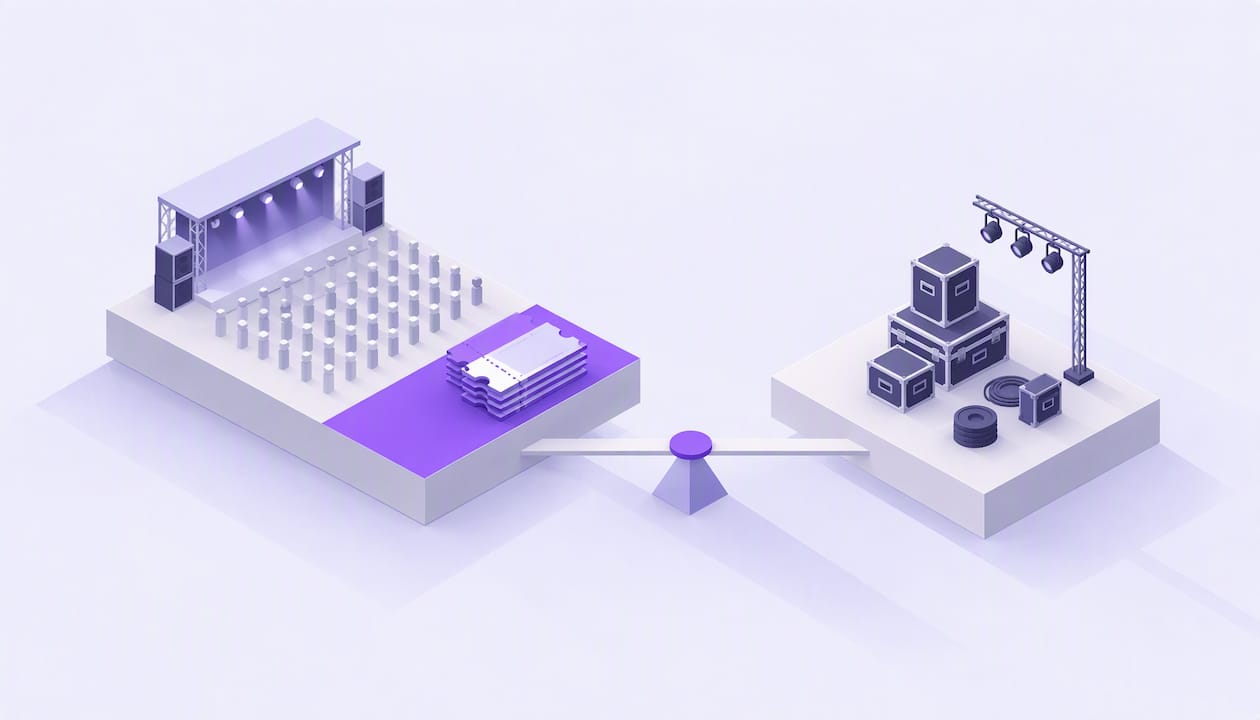
Ticket Sales Break-Even Analysis for UK Shows
Work out how many tickets you must sell to cover a UK show: VAT, PRS, fees, fixed costs and a worked example, plus a free break-even calculator.
 2026-10-18
Refund Policy for Concerts: What UK Promoters Must Offer
What UK law and industry rules require when a concert is cancelled, moved or the buyer changes their mind, plus how to write a clear refund policy.
 2026-10-15
Facebook Ads for UK Promoters: Track Ticket Sales Before Spend
UK promoters can set up Meta pixel and Conversions API tracking, choose audiences, estimate ticket costs, and link Facebook ad spend to ticket revenue.
 2026-10-14
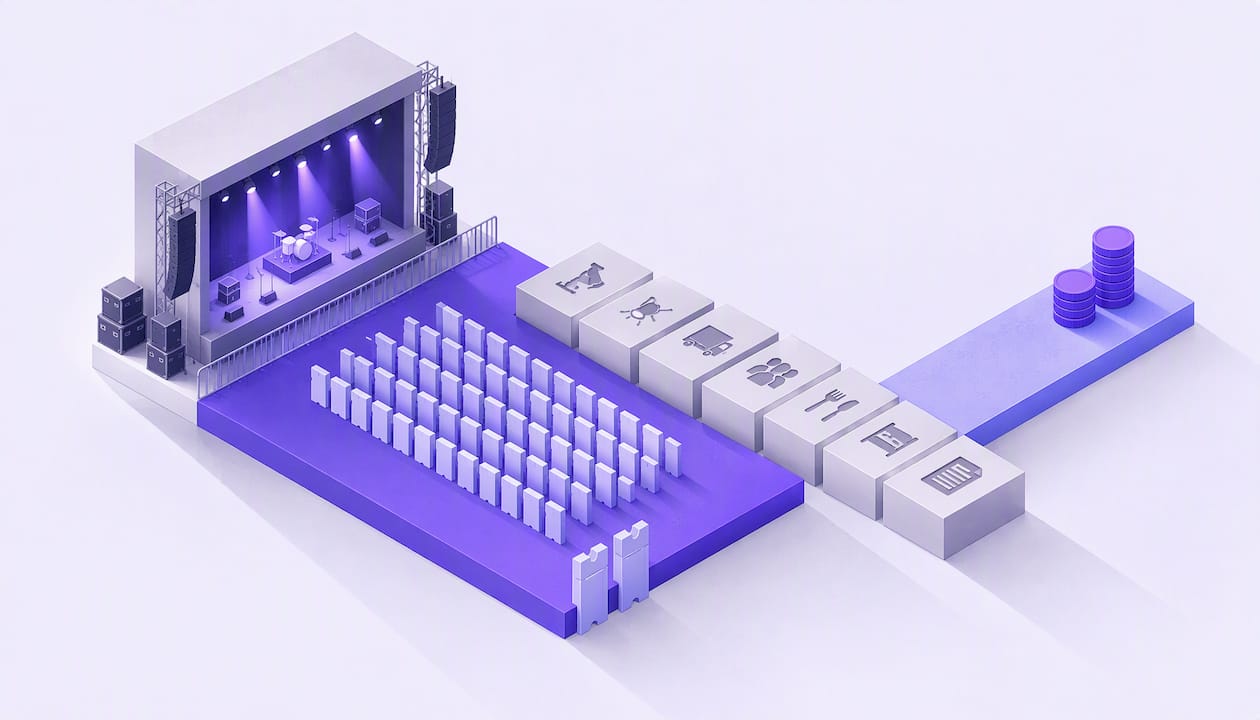
Profit Margins: Test 10 P&L Lines for UK Concert Promoters
See how UK concert promoters can model profit per show with 10 P&L inputs, test sell through and costs, and check break even before committing a deposit.
 2026-10-13
AI Audience Analytics: UK Promoters Use the First 72 Hours of Sales
Use the first 72 hours of ticket sales to spot likely return buyers, test consented campaigns, and plan an 8 to 12 week AI analytics rollout for UK promoters.