LOOKPORT / TICKETING & EVENT BUDGETING
Refund Policy for Concerts: What UK Promoters Must Offer
What UK law and industry rules require when a concert is cancelled, moved or the buyer changes their mind, plus how to write a clear refund policy.

A UK concert refund policy has to do two things. It must honour the refunds the law gives buyers, and it must set clear rules for everything the law leaves to you. Buyers have no automatic right to a refund if they simply change their mind. They do have a right to their money back if you cancel the show, and usually if you move it to a date they cannot make.
This guide is for promoters, venues and organisers who need to write or tighten a policy before tickets go on sale. It covers what is fixed by law, what you can decide, how to word it, and how to budget for refunds.
TL;DR
- Change-of-mind refunds are not a legal right for concert tickets. Refunds for cancelled events are.
- Cancelled event: refund at least the face value. Rescheduled event: offer a refund window to buyers who cannot attend the new date.
- “No refunds under any circumstances” is not enforceable if you fail to deliver the show. Write the exceptions down.
- A clear policy shown before purchase reduces disputes and chargebacks.
- Put a refund reserve in your budget. You can model it in the tour break-even calculator.
Table of Contents
- What the law says about concert ticket refunds
- What a good refund policy contains
- Why a clear policy protects your payments
- Budgeting for refunds
- Reducing refund requests before they happen
- Ticketing set up for your own terms
- FAQ
- Next step
- Sources
What the law says about concert ticket refunds
Three situations cover almost every refund request. Each has a different legal position.
| Situation | Is the buyer entitled to a refund? | What you decide |
|---|---|---|
| Buyer changes their mind | No automatic right | Whether to offer exchanges, transfers or goodwill refunds |
| Event cancelled by you | Yes, at least the face value | How you process it and how you communicate it |
| Event rescheduled or moved | Generally yes, if the buyer cannot attend | Length of the refund window and the process |
Change of mind: no cooling-off period
Online purchases normally carry a 14-day right to cancel. Tickets for a concert on a specific date are an exception. The Consumer Contracts (Information, Cancellation and Additional Charges) Regulations 2013 exempt leisure services booked for a specific date. A buyer who simply cannot go has no statutory claim.
That does not mean you must refuse. It means you set the rule. Many organisers allow transfers to another named person, or a resale route at face value. Whatever you choose, state it before checkout.
Cancelled shows: refund at least the face value
If you do not deliver the show, you have not delivered the service the buyer paid for. The Competition and Markets Authority (CMA) set out its position in its statement on consumer contracts, cancellation and refunds. Whether a consumer is entitled to a refund depends on the service and the contract terms. Terms cannot be used to avoid refunding for a service that was not provided.
The industry’s self-regulatory body, the Society of Ticket Agents and Retailers (STAR), sets the same floor for its members. Which? explains that a buyer of a cancelled event is entitled to at least the face value of the ticket under STAR rules. Those rules apply to STAR members, so check whether your ticketing agent or venue is one.
Two practical points follow:
- Face value is the minimum. Whether booking fees are returned is a separate question. The CMA’s position is that you should not charge an administration fee for processing a refund the buyer is owed because you failed to deliver.
- A policy that calls the payment a non-refundable deposit does not change this when the show does not happen.
Rescheduled shows: the refund window
A new date is a change to what the buyer bought. If they cannot make it, they are generally entitled to a refund. Which? notes that the usual route is for the ticket seller to refund when an event is moved, and Citizens Advice tells buyers with an official ticket that they can get a refund if the organiser cancels, moves or reschedules the event.
The law does not fix how long the window must be. Common practice is a window of a few weeks after you announce the new date. Pick a number, publish it, and give buyers a direct way to claim.
Resale and transfers
If you allow resale, be aware of section 91 of the Consumer Rights Act 2015. It restricts cancelling or blacklisting a ticket because it was resold through a secondary platform, in certain circumstances. Do not write a policy that voids every resold ticket without checking your wording against it.
What a good refund policy contains
A policy that works on the day a problem arises is specific. Use plain headings and short sentences. Cover these points.
- Scope. Which events and ticket types the policy covers, including VIP and add-ons.
- Change of mind. State clearly that tickets are not refundable for change of mind, and say what you offer instead: transfer, name change or resale.
- Cancellation. Say you will refund at least the face value. Say what happens to booking fees.
- Rescheduling. Say how buyers will be told, the length of the refund window, and what happens to tickets if they do nothing.
- Material changes. Headliner changes, venue changes or major time changes. Decide in advance which count as grounds for a refund.
- How refunds are paid. Back to the original payment method. If the card has expired or been replaced, say how the buyer should contact you.
- How to claim. One email address or form. Include what information you need, such as order number and name.
- Timing. Give an honest range for how long refunds take, based on your own payment set-up. Do not promise a number you cannot control.
- Complaints. Who to contact, and which dispute resolution scheme applies if you belong to one.
Wording that causes trouble
Some phrases create risk rather than reduce it.
- “No refunds under any circumstances.” This is unenforceable where you fail to deliver the show. Replace it with a precise statement: no refunds for change of mind, full face-value refunds if the event is cancelled.
- “Refunds at the promoter’s discretion.” This is vague. Buyers read it as a refusal, and the CMA expects terms to be clear.
- Disproportionate charges. Large fixed fees for cancelling or refunding can be challenged as unfair.
- Hidden terms. Terms that appear only after payment are weaker than terms shown at checkout.
For a real-world example of the structure, read how a large UK festival organiser handles it. Festival Republic’s 2025 terms for Latitude have a dedicated refunds section that limits refunds to defined situations and sits next to the governing law clause. Your own terms should be tailored to your event, so take the layout as a reference and have a solicitor review the wording.
A sample refund clause (hypothetical wording)
This is illustrative wording to adapt, not legal advice.
Tickets are not refundable if you change your mind. You may transfer your ticket to another person using the link in your confirmation email. If we cancel the event, we will refund at least the face value of your ticket to the payment method you used. If we move the event to a new date and you cannot attend, you can request a refund within [X] days of our announcement by emailing [address].
Fill in the window yourself, and make sure your operations team can meet it.
Why a clear policy protects your payments
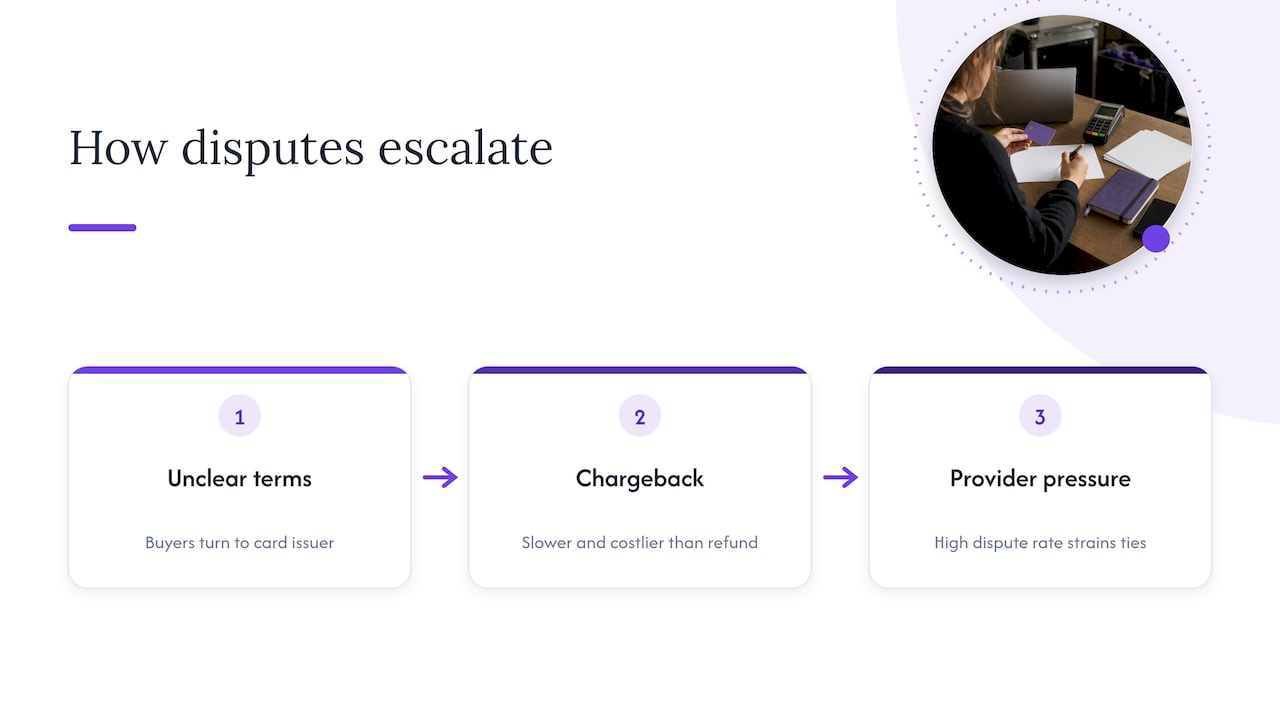
A refund policy is also a dispute-prevention tool. Buyers who cannot find the rules, or who feel misled, often go to their card issuer instead of to you. A chargeback is slower and more costly than a direct refund, and a high dispute rate can put your relationship with your payment provider under pressure. Check your provider’s current dispute terms rather than assuming.
Citizens Advice publishes festival-season tips for event-goers, including advice to buy from official sellers and to read the terms. Assume your buyers have read it. Make your terms easy to find.
The same principle applies outside music. A booking-software publisher has written a practical guide to cancellation policies for leisure businesses (in Dutch). It makes the point that transparent cancellation rules reduce payment disputes, which holds equally for ticketed shows.
Keep fee wording consistent with the refund wording
Your refund promise and your fee display need to match. If you show an all-in price, say what happens to the whole amount on a cancellation. Our guides on all-in ticket pricing for UK organisers and ticket fee strategy cover how to present fees without creating a compliance problem.
Budgeting for refunds
Refunds are a cost line. If you leave them out, a rescheduled show can turn a break-even plan into a loss. You do not need to predict them exactly. You need a reserve and a scenario.
A hypothetical example
The figures below are invented to show the method. They are not a result, a benchmark or a forecast.
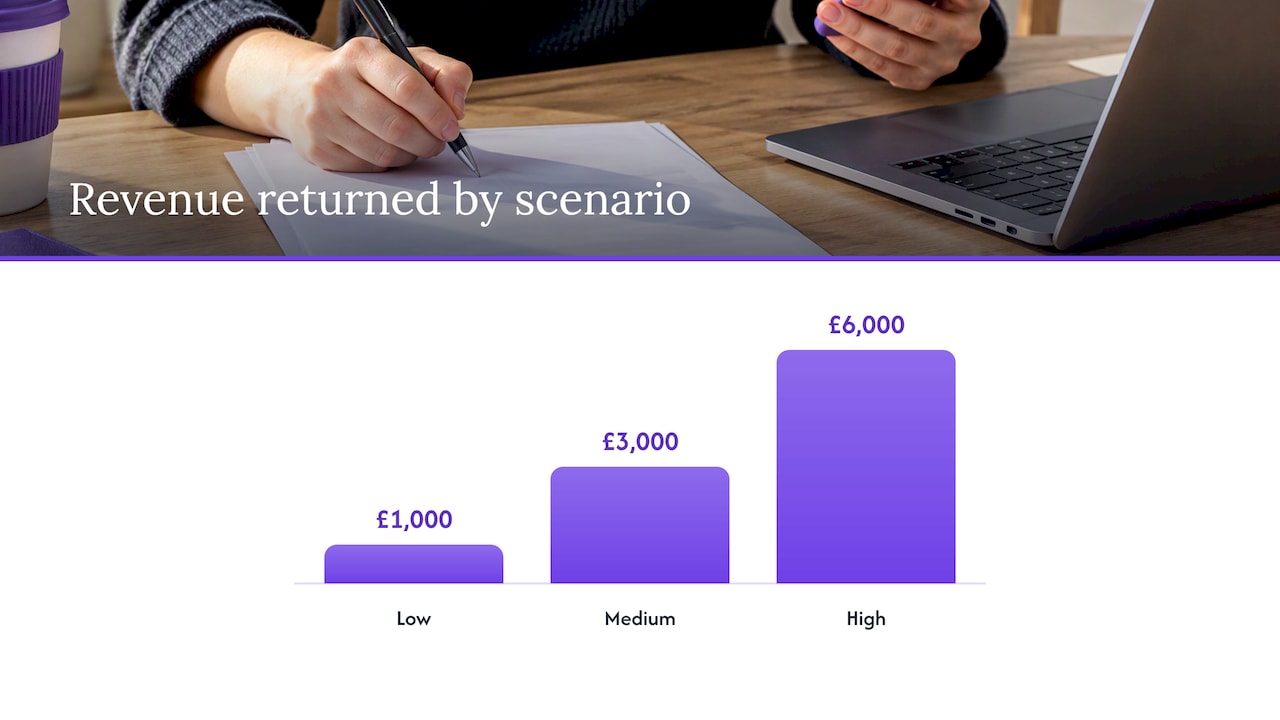
Say you sell 800 tickets at £25, which is £20,000 of gross ticket revenue. Your show is moved, and you offer a refund window.
| Scenario | Share of buyers who claim | Tickets refunded | Revenue returned |
|---|---|---|---|
| Low | 5% | 40 | £1,000 |
| Medium | 15% | 120 | £3,000 |
| High | 30% | 240 | £6,000 |
The lesson is in the spread. Under the high scenario, £6,000 leaves your account while most of your costs, such as artist deposits and venue hire, are already committed. Before you announce a new date, check your cash position under the high case.
Inputs, workflow and limits
A simple workflow:
- List fixed costs already paid or committed: deposits, venue hire, production, marketing.
- Enter ticket price, capacity and expected sell-through.
- Add a refund share for each scenario, as in the table.
- Check break-even under each scenario.
- Decide how much cash to hold back until the date is confirmed.
The limits are important. The refund share is an assumption, not a measurement. Compare it with your own past events if you have the data, and treat any figure borrowed from another promoter’s show with caution. If you have no history, use a wide range. For the cost side, see our concert budget breakdown, and for sell-through assumptions our guide on AI ticket forecasts and budget cases.
You can run the same scenarios in the tour break-even calculator by changing ticket price, costs and sales volume and watching where break-even moves.
Reducing refund requests before they happen
Most refund requests are avoidable or can be redirected into a better outcome.
- Offer name changes and transfers. A buyer who cannot attend can pass the ticket on. You keep the sale.
- Communicate early. If a date is at risk, tell buyers as soon as you know. Silence generates complaints.
- Send clear confirmations. Include the date, venue, doors time and a link to the refund policy in the confirmation email.
- Track no-shows. If a lot of buyers do not turn up, look at reminders and transfers. Our guide on reducing no-show rates for UK promoters covers this.
- Check VAT treatment of refunds. Refunds can affect your VAT position, so read our VAT on ticket sales checklist and ask your accountant.
Ticketing set up for your own terms
The refund policy is yours, and so is the money. With Lookport Ticketing, ticket proceeds go directly into your own Stripe account, so the funds sit with you rather than with a third party. Lookport charges a 6% commission with no other Lookport charges, which makes refund and break-even modelling simpler because there is one platform fee to include. Availability follows Stripe-supported countries.
Lookport does not set your refund terms for you. You decide them, publish them, and apply them under UK consumer law. If you want to see how the fee affects your margin, use the ticketing fee calculator.
FAQ
Are concert tickets refundable if I change my mind?
Not as a legal right. Concert tickets for a specific date are exempt from the 14-day cooling-off period in the 2013 Regulations. Organisers can still choose to offer transfers, exchanges or goodwill refunds, and should say so in their terms.
Do I have to refund booking fees if I cancel a show?
You must refund at least the face value. The CMA’s position is that buyers should not be charged an administration fee for a refund caused by your failure to provide the service. Whether you return booking fees in full is a question to settle with your ticketing provider and, if unsure, a solicitor.
What if I reschedule and some buyers cannot attend?
They are generally entitled to a refund. Announce the new date clearly, set a refund window, and tell buyers how to claim. The law does not set the window length, so choose one you can administer.
Can I put “no refunds” on my tickets?
You can say there are no refunds for change of mind. You cannot use the wording to avoid refunding a cancelled show. A blanket “no refunds under any circumstances” clause is unenforceable if you do not deliver the event.
Next step
Before you publish your policy, model the worst case. Open the tour break-even calculator, add a refund scenario to your costs and ticket price, and see whether the show still breaks even.
Sources
- Consumer Contracts (Information, Cancellation and Additional Charges) Regulations 2013
- CMA statement on consumer contracts, cancellation and refunds
- Which?: How do I get a refund from a ticket seller?
- Citizens Advice: Getting a refund on an event ticket
- Consumer Rights Act 2015, section 91
- Latitude Festival 2025 ticketing terms
- Citizens Advice: festival season tips
Recommended
Ticketing & event budgeting
 2026-10-22
Ticketing Analytics for UK Promoters: What to Track and Why
Ticketing analytics for UK concert promoters: the metrics that drive decisions, how to set up tracking, and how to tie sales data back to your show budget.
 2026-10-21
Concert Break-Even Calculator: How Many Tickets You Must Sell
Work out how many tickets a UK concert needs to break even. Costs, PRS, ticket commission, a worked example and a free calculator for promoters and venues.
 2026-10-19
Ticket Sales Break-Even Analysis for UK Shows
Work out how many tickets you must sell to cover a UK show: VAT, PRS, fees, fixed costs and a worked example, plus a free break-even calculator.
 2026-10-15
Facebook Ads for UK Promoters: Track Ticket Sales Before Spend
UK promoters can set up Meta pixel and Conversions API tracking, choose audiences, estimate ticket costs, and link Facebook ad spend to ticket revenue.
 2026-10-14
Profit Margins: Test 10 P&L Lines for UK Concert Promoters
See how UK concert promoters can model profit per show with 10 P&L inputs, test sell through and costs, and check break even before committing a deposit.
 2026-10-13
AI Audience Analytics: UK Promoters Use the First 72 Hours of Sales
Use the first 72 hours of ticket sales to spot likely return buyers, test consented campaigns, and plan an 8 to 12 week AI analytics rollout for UK promoters.