LOOKPORT / TICKETING & EVENT BUDGETING
Last-Minute Ticket Sales Tactics for UK Promoters
A practical plan for the final weeks before a show: diagnose slow sales, work out your break-even gap, target the right audiences and stay within UK pricing rules.
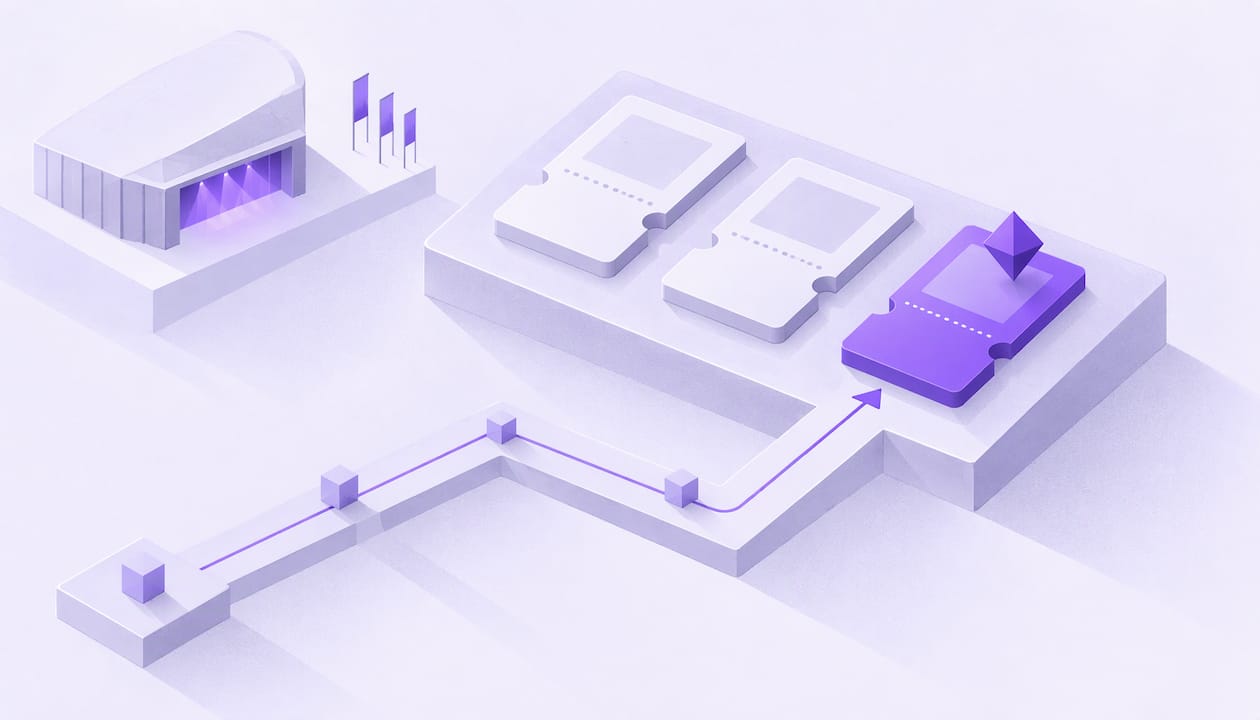
The best last-minute tactic is a number: how many more tickets you must sell to break even, and by when. Once you have that gap, you can pick the tactic that closes it, check the cause of the slow sales before spending on ads, and keep every offer within UK consumer rules. This guide gives you that sequence for the final two to three weeks before a concert, festival date or club show.
If you work out the gap in your ticketing data and the budget calculator before anything else, the rest of the campaign gets simpler. Every message, discount and ad spend decision then has a ticket target attached.
TL;DR
- Start with your break-even gap, not with a discount. Know how many tickets you still need and what each one nets you after fees.
- Diagnose before you spend. Check your tracking, the sales curve by ticket tier and who has already bought, because slow sales have different causes that need different fixes.
- Spend on the people closest to buying: past buyers, presale sign-ups, people who visited the ticket page, and promised attendees you have not yet chased.
- Use urgency only when it is true. UK rules cover “from” prices, hidden fees and misleading scarcity.
- Finish with a daily plan for the last 14 days and a rule for what you do if sales stay flat.
Table of Contents
- Start with the break-even gap
- Check whether the problem is real before you spend
- Chase the sales you already have
- Target the audiences closest to buying
- Use offers and urgency without breaking the rules
- A 14-day plan for the final stretch
- If sales stay flat
- How Lookport Ticketing supports the final weeks
- FAQ
- Sources
Start with the break-even gap
Before you change a price or buy a single ad, find out what the show needs. The Live & Local promoter handbook tells promoters with two to three weeks to go to check three things: how many tickets all your sellers have sold, how many promised sales you have, and how many tickets you need to sell to break even.
Three numbers give you the gap:
- Total show costs. Artist fee, venue hire, production, marketing already spent, insurance, staff and a contingency.
- Net revenue per ticket. Ticket price minus whatever each sale costs you. On Lookport Ticketing that is a 6% commission with no other Lookport charges. Payment processing charged by Stripe is separate, so check your own Stripe account for it.
- Tickets sold so far. Count paid tickets only. Promises and reserved places are a separate line.
A worked example (hypothetical)
This is an invented show to show the arithmetic, not a result from a real event.
An 800-capacity venue sells tickets at £22. Total costs are £14,000. At a 6% commission, Lookport’s cut is £1.32, so each ticket nets £20.68 before Stripe’s processing fees.
- Break-even: £14,000 ÷ £20.68 = 677 tickets (rounded up).
- Sold with 14 days to go: 520.
- Gap: 157 tickets, or about 11 a day over 14 days.
Now you have a target. A promotion that needs 157 extra sales is a very different job from one that needs 400. If the gap is small, you may only need to chase promised buyers and message past customers. If it is large, you need a wider plan, or a decision on whether to adjust costs.
You can model this with your own figures in the tour break-even calculator, changing ticket price, costs and capacity to see how the gap moves.
Check whether the problem is real before you spend
A quiet week does not always mean a failing show. A Pollstar-reported study of US music events found 57% of tickets in 2024 were sold a week or less before the show. That is US data, so compare it with your own previous shows. Our guide to the concert sales curve shows how UK tickets tend to sell and how to plan for it.
Then work through the causes in order of cost, cheapest first.
1. Is your data right?
Mismatched numbers lead to wrong decisions, such as cutting a campaign that was actually working. Check:
- Do the sales in your ticketing dashboard match what your ad platform reports?
- Has anyone changed the booking form, link or a redirect in the last two weeks?
- Are campaign source parameters still coming through on links?
If you run Facebook or Instagram ads, our Meta Pixel checks cover the three things to confirm before you promote a concert, and the ticketing analytics guide explains what to track.
2. Where do sales stall?
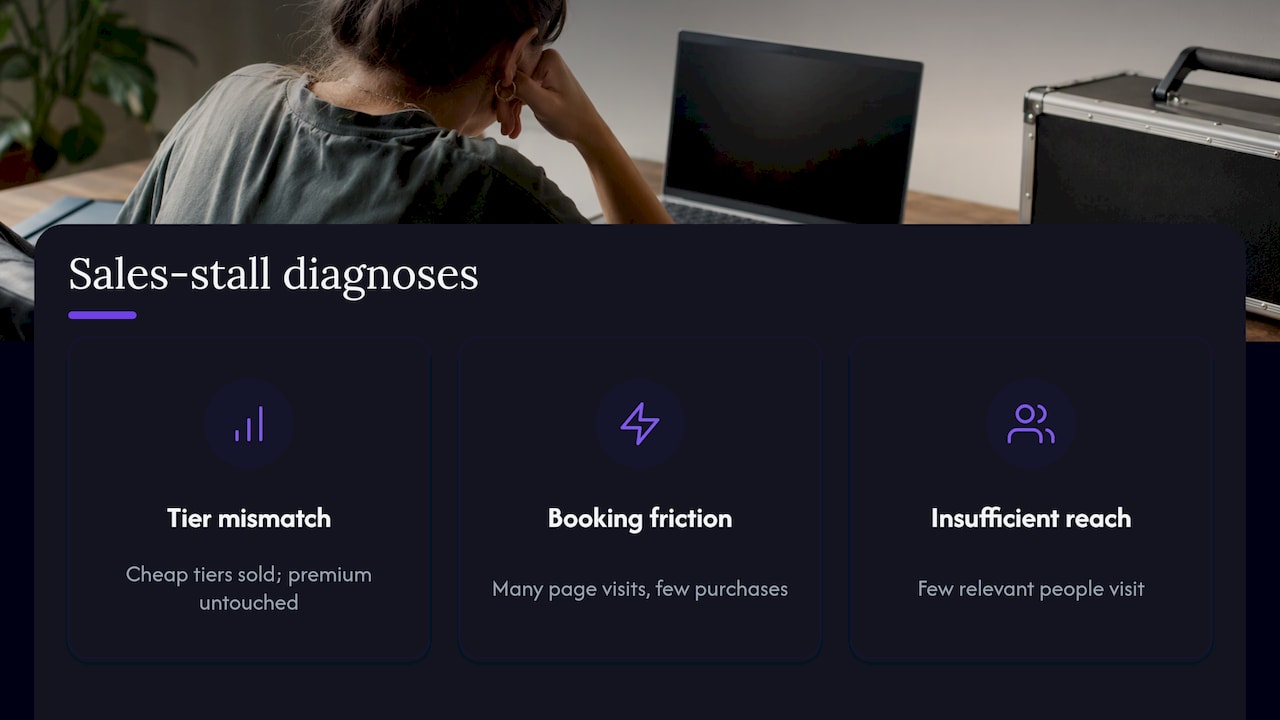
Look at the sales curve by ticket tier. If cheap tiers have sold out and premium tiers are untouched, the problem is price structure, and more advertising will not fix it. If you have plenty of visits to the ticket page but few purchases, look at the booking journey: page speed on mobile, number of steps, clarity of the total price. If few of the right people visit at all, the problem is reach.
3. Who has bought so far?
Returning buyers tend to buy early and first-timers later, so a soft early pace with strong repeat numbers may mean the first-time window has not opened yet. Split sales by new and returning buyers and by channel. A source that sold well on earlier shows and is silent now is the first place to look.
4. Is anything outside your control?
A clashing date, a nearby show with the same audience or a school holiday can all depress sales. These do not change the plan much, but they tell you whether to widen the catchment area or lean on existing fans.
Our article on AI ticketing analytics for concert promoters shows how to compare your pace against past shows, and the guide to AI ticket forecasts for budgets covers using a forecast as a planning input. A forecast is a general method that estimates likely sales from past patterns. It is an estimate, never a promise of a result.
Chase the sales you already have
The cheapest tickets to sell are the ones people have already said yes to. The Live & Local handbook suggests that, with a few weeks left, you talk to your ticket sellers, ask committee members or helpers to sell a handful of tickets each, and chase everyone who promised to come for payment. For a community or amateur promoter that is often the fastest gain. The handbook also treats 20 to 30 presales as a reasonable position at that stage for its example, so judge your own figure against your own history.
A short checklist:
- List every promised attendee, group booking and guest list request, and give each a payment deadline.
- Ask each seller or partner for their count, so no one is double-counted.
- Offer a simple way to pay: a direct link in the message, not a request to search for the page.
- Making Music’s smarter ticketing guidance (February 2026) also recommends offering more than one way to pay, including card on the door.
Target the audiences closest to buying
In the final weeks, broad awareness spend works slowly. Direct your budget and messages at people who have already shown interest.
| Audience | Why they convert | Typical message |
|---|---|---|
| Visited the ticket page, did not buy | Highest intent | A reminder with the date, venue and a direct link |
| Signed up for presale or opened earlier emails | Known interest | Final availability and what is left |
| Past buyers of similar shows | Know your events | A returner message for this show |
| People within realistic travel distance | Relevant location | Local social and search ads |
| Existing ticket holders | Already bought | Show information, a friend-bring message or the next date |
Email and messages
A sensible structure is a first message to everyone on your list, a second to the highest-intent groups, and a short text message to those who clicked through to buy. Keep existing ticket holders out of sales sends: they need show information. Making Music’s guidance recommends a posting rhythm that runs from the announcement to one month, two weeks, one week, three days and the day of the concert, plus segmented email to past attendees with early-bird and returner offers.
If you run Lookport Ticketing, the platform includes CRM and campaign tools and marketing insights, so you can work from your own buyer records. Check the Ticketing page for the current feature description.
Paid social and search
In the last weeks, use retargeting: people who visited your ticket page, watched your video or engaged with your posts, plus lookalike or custom audiences built from past buyers. Keep geography realistic: how far will someone travel for this artist on a weeknight? Our guides to Facebook ads for concerts and Google Ads for event promoters cover set-up and tracking. Search ads catch people already looking for tickets, so they suit the final fortnight. Before raising spend, read how to plan ad budgets around ticket margin, because each extra ticket only helps if its cost is below what the ticket nets you.
Venue, partner and on-the-night routes
The venue’s own mailing list, the artist’s social channels, local community groups and student societies can each carry a final push for no cost beyond your time. Promote the next show at the current one with a QR code or discount code, as the Making Music guidance suggests.
Use offers and urgency without breaking the rules
Last-minute tactics usually involve price or scarcity. In the UK both are regulated, so check before you publish.
Price changes and offers
The Business Companion’s guidance on ticket sales and resale (February 2026) says a “from” price needs a reasonable number of tickets available at that price, and that bait marketing, which attracts buyers with a low price that is limited or has undisclosed restrictions, is illegal. In practice:
- If you advertise “tickets from £18”, have a meaningful quantity at £18.
- State restrictions such as a restricted view clearly where the price appears.
- Do not advertise a deal you cannot honour.
Fees matter too. The CMA’s final guidance under the Digital Markets, Competition and Consumers Act is summarised by Reed Smith as requiring all mandatory charges to be included in the upfront price, with strict rules against drip pricing. Show the full price from the first page, and use the official CMA pages to confirm current detail.
Staged price rises over deep discounts
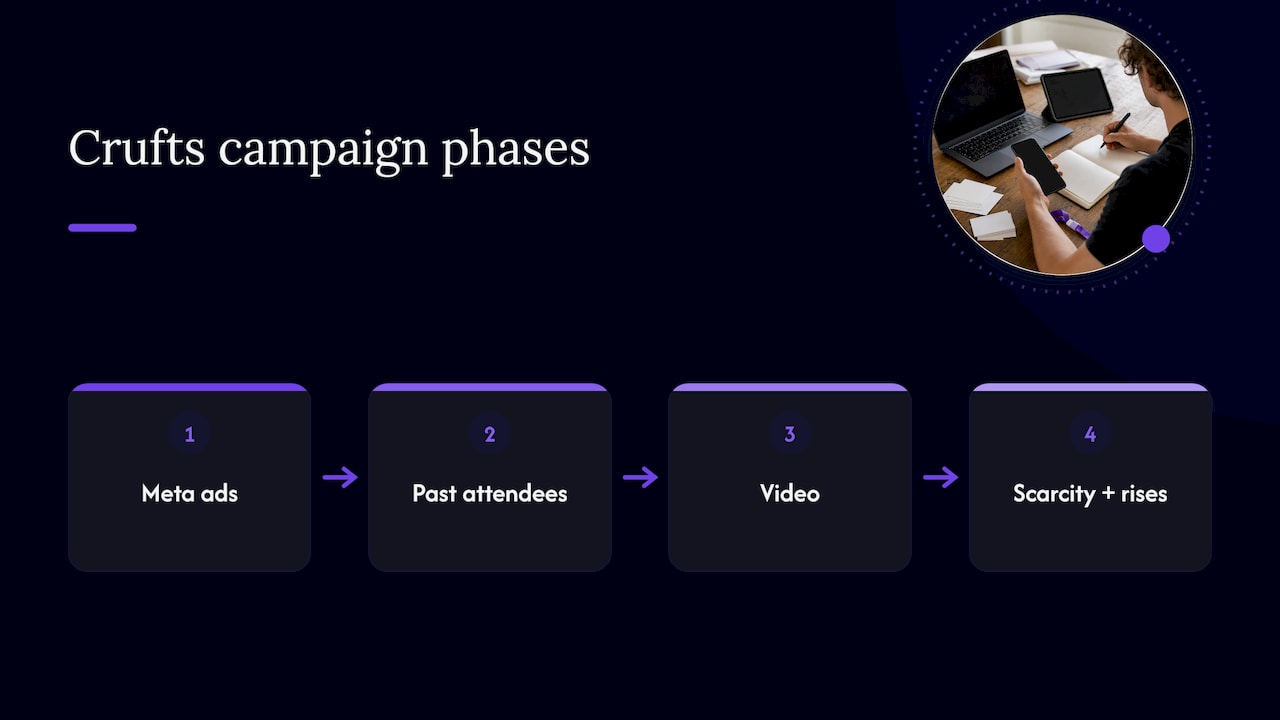
Discounting late can upset people who paid full price early, and it teaches your audience to wait. A safer pattern is to move the other way: reward early buyers, then raise the price in steps. The Drum’s Crufts case study (2026) describes a UK campaign that moved from early Meta ads to past attendees, to video, then to scarcity messaging with late price increases. It reported 8,537 purchases and £524k revenue at a 5.5 return on ad spend. Crufts is a large annual event, so treat the figures as an illustration of the method, not a benchmark for a club show. The useful lesson is the phasing: steady pressure from the start leaves less to rescue at the end.
If you do need a late offer, aim it at a defined group, for example past buyers or a mailing list, with a clear end and a stated reason. Bundles of two tickets or a ticket with a pre-show drink can lift the order value without cutting the face price.
Genuine urgency
Use scarcity only when it is true: a real capacity limit, a real price step, a real deadline. The government’s Putting fans first consultation (January 2025) notes concern that big one-off releases can create artificial scarcity. A true message such as “the last 60 tickets in the stalls” or “price rises on Friday” works, and it is safe to state. A countdown that resets, or a claim of “almost sold out” when half the room is empty, is not.
A 14-day plan for the final stretch
Adapt this to your capacity and budget. It is a template, not a guarantee of sales.
| Days to show | Action |
|---|---|
| 14 | Work out the gap. Check tracking and tier sales. Chase promised buyers. |
| 12 | Email the full list. Start retargeting ticket-page visitors. |
| 10 | Ask partners, venue and artist to post. Send a returner message to past buyers. |
| 7 | Announce a real price step or last-allocation message. Second email to engaged groups. |
| 5 | Text message to those who clicked but did not buy. Check pace against the target. |
| 3 | Final reminder with practical details: doors, travel, parking. |
| 1 | Confirm remaining capacity and any on-the-door arrangements. |
| Show day | Share a last availability update and set up the QR code for the next show. |
Each day, compare sales against the daily figure you set from your gap. If you are behind for three days in a row, decide, do not drift. That means moving to the next section.
If sales stay flat
When a plan has run and the number has not moved, go back to the diagnosis rather than adding more of the same.
- Recheck the data. A tracking fault can look like failed marketing.
- Recheck the price structure. If cheap tiers sold and premium tiers did not, consider whether the premium tier is priced or described right, or whether to release a mid-priced option.
- Reduce costs. Re-run your numbers. A smaller production, fewer staff or a reduced guest list can move the break-even number down.
- Change the capacity. Closing a balcony or a section can make a room feel fuller and reduce costs.
- Decide your loss limit. If the gap is not closable, decide in advance the point at which you stop spending. Money already spent on ads is gone, and further spend should only continue if each ticket it brings in nets more than it costs.
Write down what you learned for the next show: when sales moved, which channel produced buyers, what the real break-even was. That record shapes the next budget.
How Lookport Ticketing supports the final weeks
Lookport Ticketing is built for concert promoters, event organisers and venues. Our commission is 6% with no other Lookport charges, and ticket proceeds go directly into your own Stripe account. Availability follows Stripe-supported countries. The platform also includes AI-powered sales and demand forecasting, marketing insights, and CRM and campaign tools. The full list of what is live is on the Ticketing page, and the commission is set out on the pricing page.
If your next show is still some weeks away, work out the gap now. Enter your costs, ticket price and capacity in the tour break-even calculator and you will know the number of tickets to aim for before the final fortnight begins.
FAQ
What is the quickest way to sell tickets in the last week?
Contact people who are already close to buying: those who visited your ticket page, signed up for presale or promised to attend. Send them a clear message with a direct link and a true reason to act now. This usually costs less than reaching new audiences.
Should I discount tickets at the last minute?
Try other levers first, such as chasing promised buyers, messaging past customers and showing a real price step. If you do discount, target a defined group, state the terms clearly and keep any “from” price backed by a reasonable number of tickets, as UK guidance requires. Consider how it affects people who paid full price.
How do I know if slow sales are a real problem?
Compare your sales against the same point on earlier shows and against your break-even number. Many events sell a large share of tickets in the final week, so a quiet period may be normal. It is a problem when the daily pace needed to reach break-even is well above anything you have achieved before.
Can I create urgency without misleading people?
Yes, when the urgency is real. A true capacity limit, a scheduled price rise or a stated deadline is fine. Fake countdowns or invented “selling fast” claims risk breaching UK consumer law.
Sources
- Tickets not selling | Live & Local promoter handbook
- Smarter ticketing presentation | Making Music
- Sale and resale of tickets | Business Companion
- Putting fans first: consultation on the resale of live events tickets | DBT and DCMS
- Why Crufts switched to digital-only media to drive early ticket sales | The Drum
- Full price, no surprises: CMA’s final price transparency guidance | Reed Smith
- Ticket sales slow? A mid-cycle and walk-up playbook | b00st
Recommended
Ticketing & event budgeting
 2026-11-22
Multi-Currency Ticketing: A UK Promoter's Guide to Fees and FX
How multi-currency ticketing works for UK promoters: settlement currencies, card and conversion fees, refunds, and a worked example to budget it before you sell.
 2026-11-21
Tour Announcement Strategy: A UK Promoter's Plan
Plan a tour announcement from break-even to on-sale: lead times, sequence, channels, first-48-hour measures and budget, with a worked UK example.
 2026-11-19
Secondary Market Monitoring for UK Promoters
What secondary market monitoring means for UK promoters: which resale signals to watch, what they tell you about demand, and how to act on them within the rules.
 2026-11-18
Marketing Budget Allocation for Concerts: A UK Promoter's Guide
Set a concert marketing budget from gross potential and ticket margin, split it by sales phase and channel, and know when to move money. UK worked example.
 2026-11-17
Ticket On-Sale Timeline: A Planning Schedule for UK Promoters
Plan your ticket on-sale timeline: announcement, presale, general sale and final push, with a week-by-week schedule and a worked example for UK promoters.
 2026-11-16
AI for Event Marketing: A UK Promoter's Practical Guide
How UK promoters can use AI for event marketing: audience segments, demand forecasts, copy, chatbots and measurement, with ICO rules and a worked budget example.